
Getting Started with Online Course Design
Introduction
Designing an online course for the first time can feel overwhelming, but it also presents new opportunities for meaningful student engagement. Online learning supports flexible interaction, personalized assessment, and learning experiences that may not be possible in a traditional classroom.
While the format is different, the core principles of good teaching still apply. Effective online courses are intentional, student-centered, and built around clear learning objectives.
A Closer Look
First Steps in Online Course Design
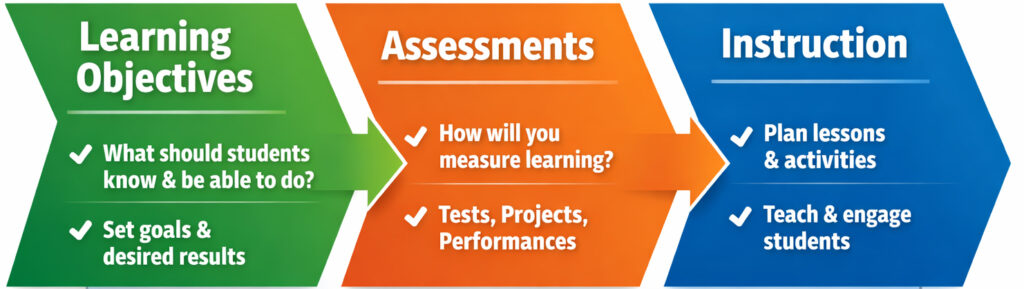
Many instructors are tempted to begin with technology, but effective course design starts with learning objectives. Begin by identifying what students should know and be able to do, then determine how you will measure their learning.
Once outcomes and assessments are defined, you can design learning activities and choose technologies that best support them. Instructional designers can help align content delivery and activities with your goals.
The Role of the Online Instructor
Online instructors take on multiple roles beyond delivering content. They design learning experiences, support student engagement, and guide learners through the course. Additionally, instructors foster communication, build community, encourage persistence, and provide feedback aligned with the learning objectives for the course. Here are seven principles to keep in mind when teaching online:
Online Course Quality and Academic Integrity
High-quality online courses should match the rigor and standards of face-to-face instruction. Maintaining academic integrity and strong course design is essential for student success. Here are some strategies to maintain the same level of academic demand in your online course:
Good online course design starts with clear learning objectives. When you plan from the objectives first and then design assessments and activities, the course becomes more focused and easier for students to follow. Online teaching also offers flexibility and new ways to engage students, but it works best when it is planned carefully. With clear expectations, strong structure, and attention to academic integrity, you can create a course that supports student learning and maintains quality.