
Transparency in Learning and Teaching (TILT)
Introduction
Equity-focused teaching is about creating conditions where all students have a fair opportunity to succeed in a course. One effective way to support this is through transparent teaching practices. The Transparency in Learning and Teaching (TILT) approach is an assignment design strategy that helps reduce barriers to student success by clearly explaining what students are learning, why it matters, and how they should complete the work.
A Closer Look
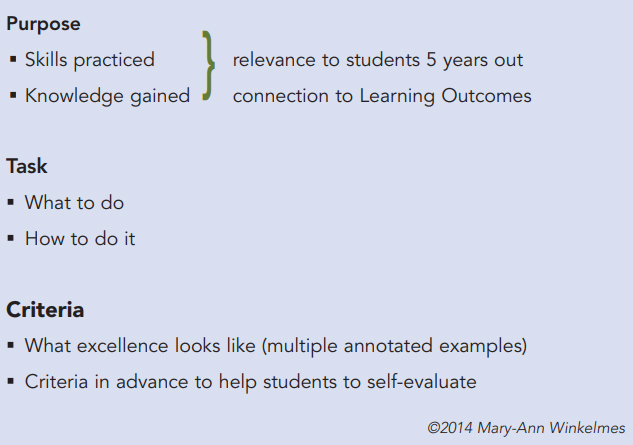
TILT is a simple and flexible way to improve your existing assignments. You do not need to redesign an assignment from scratch. Instead, small changes can make expectations clearer and more accessible for students. The process focuses on making three key parts of every assignment explicit: purpose, task, and criteria.
Three Steps to “TILT” an Assignment
Explain why the assignment matters. Help students see how it connects to their learning.
Include:
- The specific skills students will practice or develop
- The knowledge they will gain
- How the assignment connects to the course, discipline, or the world outside the classroom
When students understand the purpose, they are more engaged and motivated to persist through challenges. A purpose also promotes equity and helps students see how each assignment fits into their broader learning.
Spell out exactly what students need to do to complete the assignment successfully.
Include:
- Step-by-step instructions or a clear task list
- Any required format, structure, or components
- Common mistakes or misunderstandings to avoid
Clear instructions reduce confusion and help students focus their energy on the learning itself rather than trying to interpret expectations.
Explain what successful work looks like.
Include:
- A rubric, or a clear description of grading criteria
- What you will prioritize when evaluating the work
- Examples that align with each performance level detailed in your rubric or grading criteria
When students understand how their assignment will be assessed, they can better evaluate their own work and improve their performance before submitting.

Equitable Teaching Tip: Use Plain Language
Use straightforward, accessible language in your assignment instructions. Avoid unnecessary jargon unless learning that language is part of the goal. Students should be able to clearly understand what they are being asked to do, why they are doing it, and how success will be measured. For practical strategies, see the Plain Language Tip Sheet for ways to make assignment instructions clearer for a wider range of students.
Benefits of TILT at a Glance
Using the TILT approach can help you:
- Reduce confusion and make assignments more accessible to all students
- Increase student motivation and engagement
- Strengthen alignment between assignments and course learning objectives
- Improve course organization overall by designing assignments that are clearly written, well-structured, and aligned with learning objectives
Additional Resources
- Equity-Focused Teaching Strategies from the University of Michigan Center for Research on Learning and Teaching
- ‘Ridiculously Simple and Very Successful’: How Faculty in Virginia Are Making Assignments More Transparent and Equitable from AAC&U
- TILT Higher Ed