
Choosing Textbooks with CARE
Introduction
When selecting textbooks, the CARE approach—Cost, Availability, Relevance, and Essential use—can help ensure that students purchase the materials they need and are prepared for the course. It encourages instructors to consider more than just content, emphasizing whether a book is both affordable and truly essential.
Because high textbook costs can prevent some students from participating (or even enrolling) in a course, using the CARE approach helps you choose materials that are necessary, accessible, and affordable. Thoughtful textbook selection supports learning, reduces barriers, and helps all students succeed.

CARE Questions to Consider
- Cost: Is it affordable?
- Availability: For older editions, how easy is it to find, and how long will it be printed? Does it provide multiple formats (i.e., digital, loose-leaf, hardcover)?
- Relevance: Does it have the most current information?
- Essential: How much of the book will be used in the course?
A Closer Look
Timeline for Ordering Textbooks
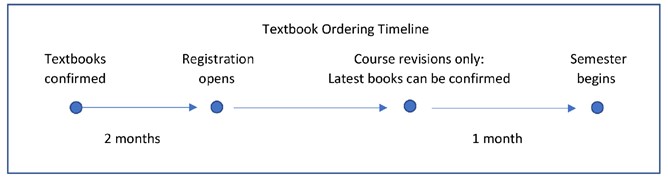
Selecting textbooks using the CARE approach is only the first step. Equally important is following a clear timeline to ensure students can access the materials they need before the semester begins. If you are working with an OPLR instructional designer, they will coordinate with internal and external partners to confirm that your chosen textbooks are not only relevant and necessary but also available and affordable for students in time for class. This process takes place over several months, as you can see in the timeline below.
Common Issues with Older Edition Textbooks
When selecting textbooks, older editions can present hidden challenges. Factors emphasized by the CARE approach—cost, availability, format, and relevance—can influence whether students purchase or use the assigned edition. The sections below outline common issues with older editions and show why careful planning with the CARE approach and ordering timeline is essential.
More Expensive
As supply dwindles, older editions of a textbook become much more expensive. For example, new versions of a textbook may be around $50, whereas an older version is over $300. This might be incredibly cost-prohibitive for some students, who may be at risk of dropping the course because they can’t afford the textbook.
Limited Availability
Older editions can be difficult to source and become unavailable at any point. In some cases, instructors have had to work with students using two different editions, which can be incredibly stressful for everyone.
Limited Format Options
Older editions are usually only available in a used physical copy, which can be problematic if the course uses a third-party tool that requires students to purchase the new copy to get access to these tools. For example, for new editions, Follett can list multiple formats, including rental, purchase, new, used, and digital options.
Student Skepticism
Students are often skeptical of older editions’ relevance. They frequently question how current or useful the information will be and may even choose to enroll in courses at other institutions where the material is more up-to-date, believing they will have a more meaningful and relevant learning experience.
Additional Resources
- Average Cost of College Textbooks from the Education Data Initiative
- Students may avoid paying for textbooks at expense of academic success from Penn State Libraries
- Undergraduate student perspectives on textbook costs and implications for academic success by Wittkower and Lo (2020) in Open Praxis